

Dosage
| Animal / stage | Instruction |
|---|---|
| Cattle and buffalo | 50-100 ml per head per day, in feed or water. |
| Calves, goats, sheep | 10-30 ml per head per day, in feed or water. |
| Poultry | 2-3 ml per litre of drinking water. |
Zinc and B-vitamin supplement for skin, immunity and fertility.
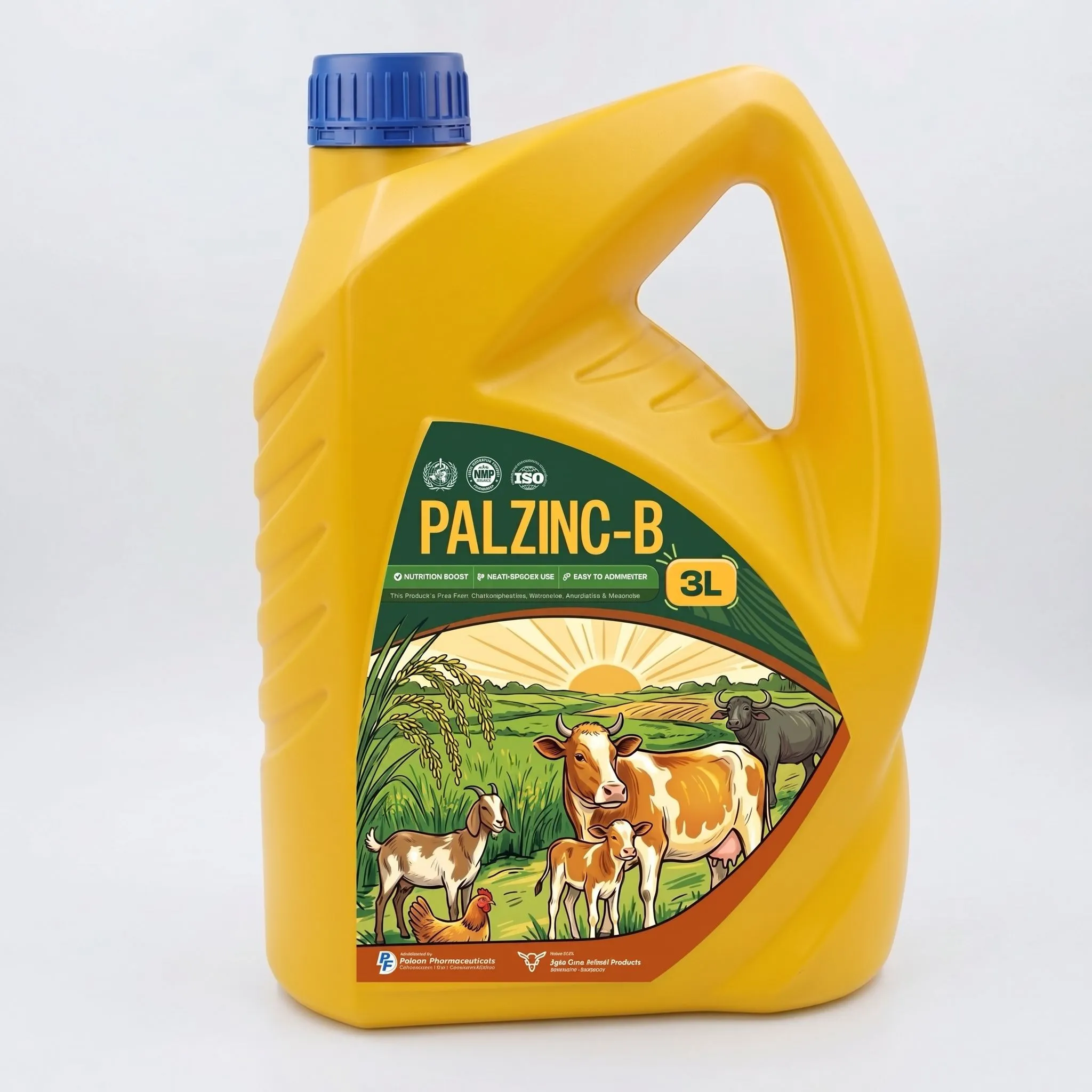
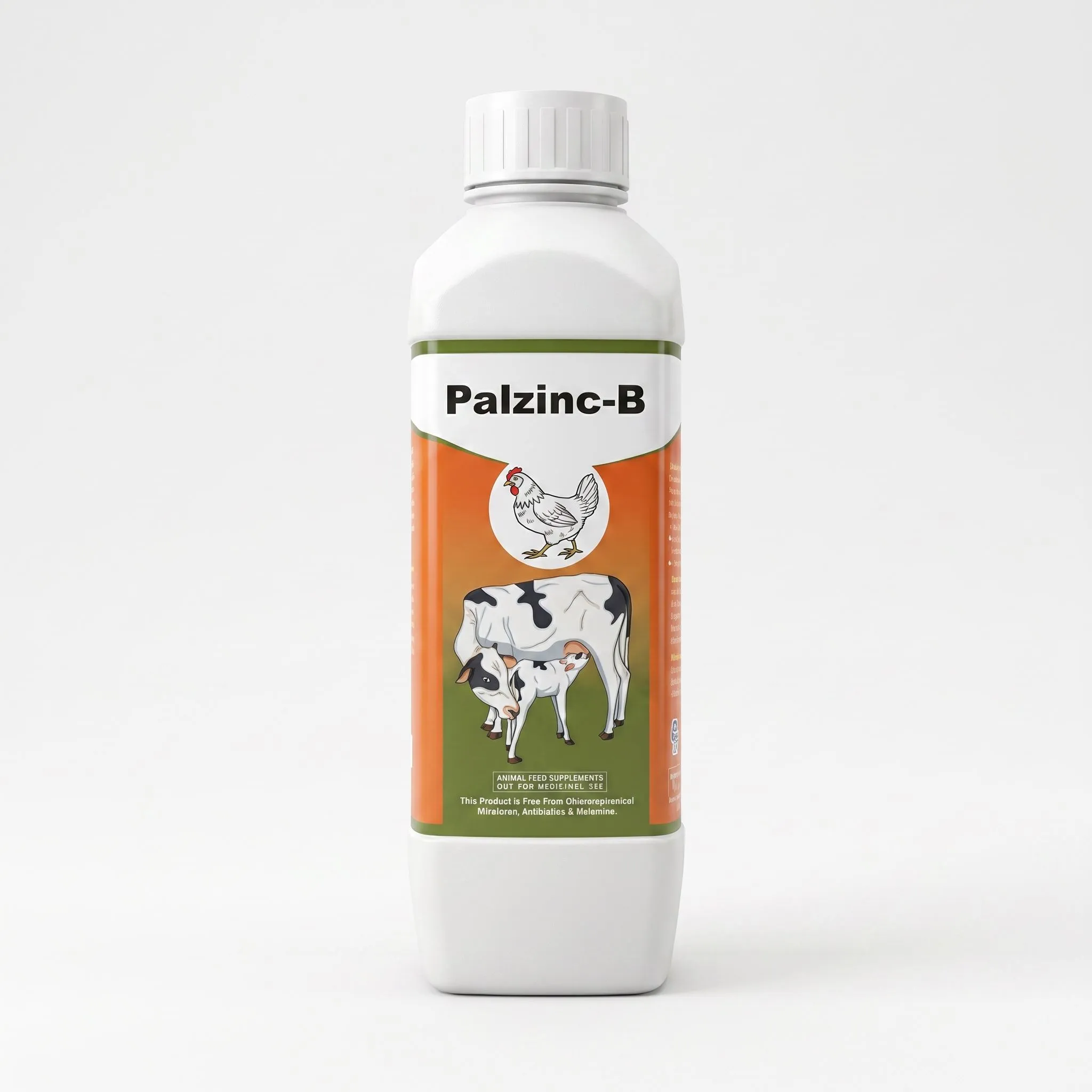
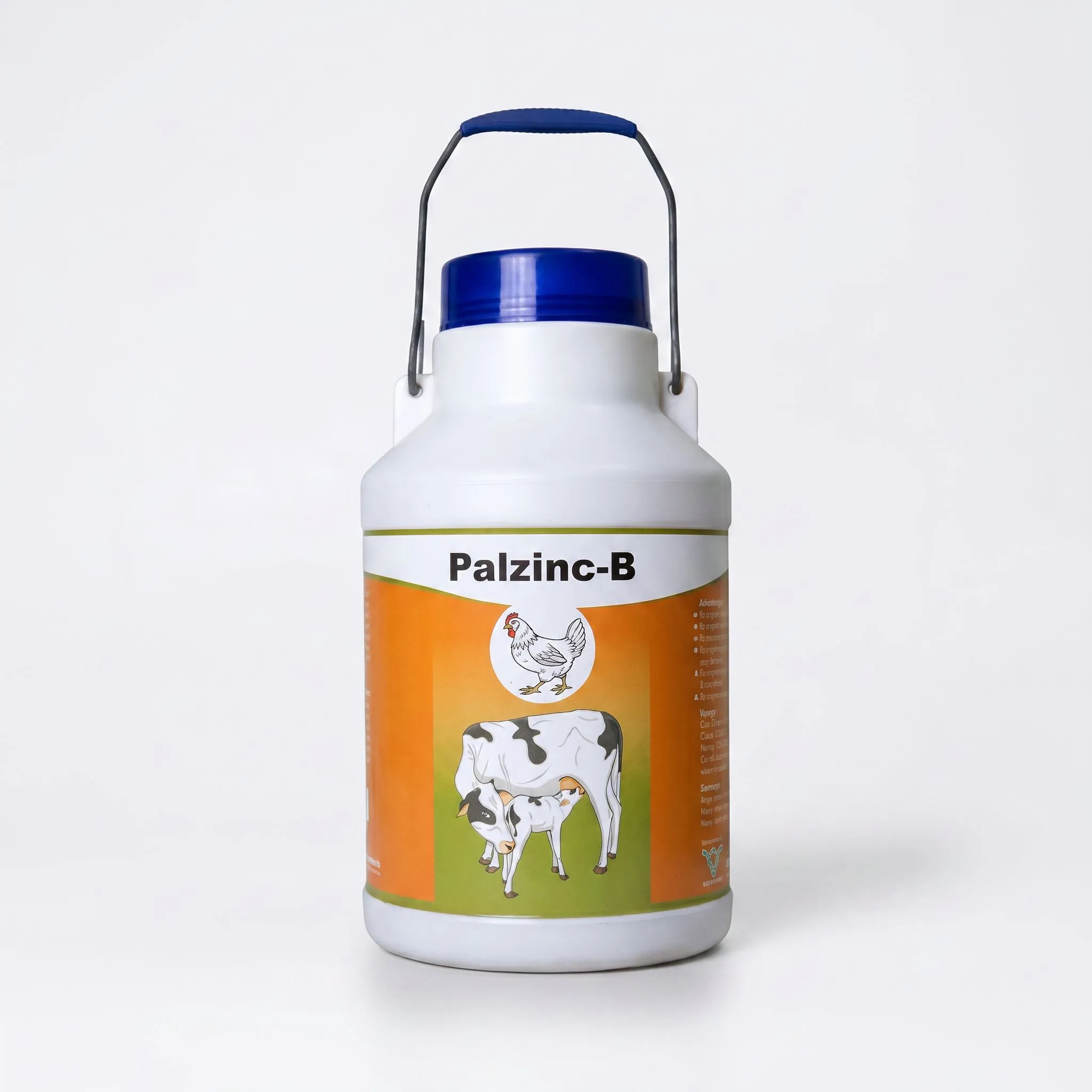
Palzinc B is a liquid zinc-B-complex supplement designed for skin health, wound healing, FCR improvement, and fertility support across cattle, goats, sheep and poultry. Heavy zinc load (200 mg elemental Zn per 100 ml) with full B-complex.
Why farmers ask for it
Heavy zinc load addresses the deficiency that drives skin lesions, poor wound healing, and low feed efficiency.
Thiamine, riboflavin-5-phosphate, pyridoxine, nicotinamide — at therapeutic doses, not just maintenance.
Same active load works across cattle, goats, sheep, poultry. Different dose for each.
Citric acid 150 mg acidifies the gut and improves trace-mineral uptake.
How we engineered it
Format
Liquid
Liquid for fast absorption. Mix in feed or water.
Zinc load
200 mg / 100 ml
Elemental zinc — high enough for therapeutic correction.
Pack
500 ml · 1 L · 3 L · 5 L
Three pack sizes — single animal to commercial farm.
What's in the pack
Every claim on the pack is sourced. For full underlying field-study data, contact our clinical team.
| Active | Per 100 ml |
|---|---|
| Elemental Zinc (from zinc sulfate monohydrate) | 200 mg |
| Thiamine | 100 mg |
| Riboflavin-5 Phosphate | 40 mg |
| Pyridoxine | 40 mg |
| Nicotinamide | 500 mg |
| Citric acid | 150 mg |
* Technical specifications, packaging designs, and ingredient levels are subject to minor adjustments based on seasonal factors, raw material availability, and continuous product improvements.
When to use it
Skin lesions and slow wound healing
Zinc deficiency is the most common cause of slow-healing wounds, hair loss, and parakeratosis. A 14-day course usually shows visible change.
FCR improvement
Better feed-to-weight conversion is the silent benefit of correcting zinc deficiency. Especially valuable in fattening cattle and growing poultry.
Dosage
Dosage
| Animal / stage | Instruction |
|---|---|
| Cattle and buffalo | 50-100 ml per head per day, in feed or water. |
| Calves, goats, sheep | 10-30 ml per head per day, in feed or water. |
| Poultry | 2-3 ml per litre of drinking water. |
From dosing to storage to who it's right for — answered straight.
2-3 weeks for visible improvement on parakeratosis and skin lesions. For severe cases, allow 4-6 weeks plus a vet visit to rule out parasites.
Yes — zinc is essential for milk synthesis and udder health. The B-complex also supports milk yield. Use at the cattle dose.
No. If there's a confirmed bacterial or parasitic skin disease, that needs targeted treatment. Palzinc B is for the nutritional component — it complements vet care.
Where to buy
40+ authorised partners across 30+ districts. One partner per district.